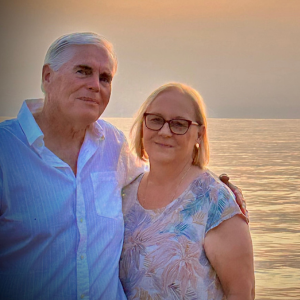
 In 2016, I fell from a standing position when I slipped on black ice while rushing into my high school in western Cape Breton, where I taught grades 10-12. The fall straight back onto pavement unceremoniously ended my beloved career. I remember my head bouncing twice on the pavement, then lights out. Thank God my fluffy coat collar broke some of the fall, or I would have had a brain bleed and/or fractured skull like another younger gentleman I met who was in a coma for over a year because of a fall on ice, and I only learned his story from his wife and mother. He was in his early thirties, a father of two young children. The unexpected can happen that fast, and being aware of that makes us more empathetic, more sensitive and aware, learned through the pain of having gone through and/or survived trauma. A cautionary tale not to hold things or words back but to live in the moment, or present.
Living in rural Cape Breton, I did not know where or how to go about getting specialized help. After ten days my family physician released me from the hospital with no direction except physio for balance. I left feeling frustrated and angry. Where to get help? From whom? I wanted my symptoms to stop, but for four months, I lived with what I did not understand. That kept me confined to my dull house, unable to function daily the way I once could. I was on a boat in rough seas, swaying back and forth with no way out, nauseous and desperate to get back to my job and students. Extreme fatigue, stuttering, multi-sensory overload, headaches, dizziness and confusion became too much. The pressure, a constant claw on my head when I tried to concentrate or focus. Memory problems scared me, as did my gibberish, saying the wrong word, always with the correct first letter. It was bizarre. Normal speech was painstaking, tediously slow, and to speak at normal speed had a conglomeration of syllables flying out.
At my wit’s end, I sent out a distress call to my sisters, who found an occupational therapist and a concussion doctor who assessed and determined the therapies I needed. Finally. Vital to success — immediately and timely getting the proper help. Because I was four months out, [the doctor] said recovery would be slower and the date of return to work unknown. Still, I visited his office once a week, and then every two weeks for the first few years. On came the onslaught of paperwork and red tape graciously passed on to my sisters.
What are some things that have helped you throughout the recovery journey?
A weekly columnist and educator, I was full of questions and just wanted the dizziness and extreme fatigue to go away. I cried on my bathroom floor, face pressed cold on the linoleum, because having a shower depleted my energy. I dropped food and needed a bib because my spatial sense was kaput. I hid under a dark jacket when driven to appointments to keep the light and moving images at bay. I just wanted to go back to the way I was, back to my classroom. And with all these repetitive I’s, I still felt small and of no value, a result perhaps because I gauged my worth from what I could do, rather than simply for who I was/am, the “am” unable to do much for years. Returning to the classroom was not to be. My career ended with an unceremonious, stupid fall, no chance to say goodbye, so long, or farewell to students or colleagues. That stung for a very long time, as did anniversary dates, and passing by my school for medical appointments upwards of three [times] a week in my Mad Hatter attempt to get back to work. I lost my identity when I fell, felt like I was no good to anyone. The house had to be quiet. No one visited. I was in an isolation bubble, and that was before COVID-19 hit. I wondered if I would ever be any good again. My self-esteem tanked and I sunk lower and lower into the doldrums. Grey was the only colour I saw.
I began months and years of therapies related to injuries from my fall, in areas I had never connected to a concussion when teaching. The educational system also needs to be made more aware. On came speech therapy, eye therapy for a midline shift and post-traumatic vision syndrome, physiotherapy for vestibular and balance issues, occupational therapy to help me function in my house, and manage my dysregulated nervous system. I learned a tremendous amount with my rapid, nonstop, garbled questions, and a keen desire to understand the incomprehensible. Every concussion is different, as are our brains because of life experiences, interests, focus, neuroplasticity, and intellect. No two are the same, so treatment varies for each.
Encouraged to write my experiences and answers down, when I started using the tips and strategies I discovered, I knew I had to share what I learned to help others struggling with brain injuries and invisible illnesses. Thus, Where Did i Go? — a memoir plus by OC Publishing, launched June 22, 2025, born in dark desperation when I did not know where to go. My goal in taking notes was to have in one place what I could use to help with my injuries. Injuries from the fall exasperated old; Fibromyalgia chronic pain and flare-ups, the onslaught of caustic, critical, inner voices, PTSD, (Post Traumatic Stress Disorder) arising from my past, with post-concussion symptoms, compounded, complicated, spun, and inter-played—One circling and interfering on, into, and with the other.
Through dogged determination, research when capable, and [the] support of trained therapists, specialists, and brain injury organizations, I eventually found what I needed to (turtle-slow) gain most of what I had lost. Shortfalls remain, but I have learned to balance and pace myself and not go over my threshold — a point at which symptoms escalate, which is less than 30% energy left in the tank. Now, when needed, I reference my book, find the suggestions or answers, and put them into practice. It is still work, but I refuse to give up on myself. I do not want to be defined by my sickness or injuries; thus, mindset is extremely important. Not a positive mindset, for that carries hidden judgement in the implication of our being negative when we feel frustrated, tired, distressed. Perhaps a better phrase is to work on a more optimistic or sanguine mindset. I also want to acknowledge family members and friends, the utmost importance of their being open to learning about this complicated invisible injury, so they can deal with mental and emotional struggles and irregularities. It is a family affair, hard on everyone. I want to thank those who become caregivers, who stick around when the going gets rough, and who continue to offer support. Thank you to my husband, Sandy, for caring enough. It is not an easy road to travel, but it can be done. With grace, love, and support from the experts, provincial and national organizations designed to do what I attempted as a small snail in a gigantic sea, when I did not know such wealth existed. And after, for a time, I could not handle computer screens. Trial and error were most important as I climbed my steep mountain, desperate to reach the top, see over and into a clearing, but the fog was too thick for too many years. A snail’s pace, recovery was far too slow. Why was I not getting better? Why was I in the 15-25% of people who develop post-concussion syndrome? Why me? But it was me, and pity parties did not cut it. Time to pull up the bloomers.
With properly trained therapists and specialists, some things became less taxing. Yoked prism glasses were life-changing, as was a weighted vest my physiotherapist suggested for grounding. My family started noticing improvement. I fought tooth and nail, using anger to climb over obstacles, after feeling sorry for myself — a vortex that threatens to suck us in and down a black as coal, rabbit hole. I found creative ways around roadblocks, especially with my stuttering once I learned about neuroplasticity, or brain plasticity. Alexa and Siri helped, and I practiced, practiced, practiced, retraining the brain, growing those fibrous jelly, synapses and injured pathways morning, noon, and night. It worked, as you can tell, just a slip every now and again to remind me how far I’ve come which we sometimes forget when lingering symptoms crash in.
If you could go back to when you first acquired your brain injury and tell yourself one thing, what would that be?
Be patient. It is not your fault. It was an accident. I have learned to pace. Keep records, write things down, eat healthy food, get eight hours of sleep, drink 6-8 glasses of water to keep the brain happy, and walk daily. Guided exercise is one of the best treatments for head injuries. You are not alone.
What would you like people who don’t have a brain injury to know?
My investigative and educational background pushed me into wanting answers when for too long there seemed to be none. I was desperate to get back to work and to my high school English, Language Arts & Literature classroom. Tell me what to do, and I would do it. But who to tell me? Even medical practitioners are not up on resources, or the findings of the last decade, sometimes offering ill advice. Education must enlighten medical personnel working with clients and patients on concussions as brain injuries, the symptoms most often seen, what to expect, and how to best help those in the throes of symptoms. And educate the public. Stats show most know little as did I before my injury.
I wrote Where Did i Go? a memoir plus over eight years. It is a personal narrative (7 stories plus mine), post-concussion educational resource, and reference book that grew from writing journals when in therapy for my injuries including concussion, whiplash, and later, PCS (post-concussion syndrome). Notice the small “i” in my book title, indicative of how I felt after my injury, what I lost, my confusion, and precipitous plunge into the world of invisible, brain injuries. It was horrible, and no one seemed to know how to help. Whether reading inspirational quotations, a fact from the education and therapies section, one of seven inspirational plus stories, specialist advice, or tapping into the eleven pages of resources including the Canadian Legacy Foundation, and Brain Injury Canada, or Nova Scotia, I have what I need at my fingertips. I understand much more and want to share it with others so they can have the answers and support I did not have until I went digging. Since my fall, I want to be an advocate for those with invisible injuries or sickness, not just concussion and whiplash, but for Fibro, chronic pain, depression, emotional and mental struggles, grief, and low self-esteem. The teacher in me wants to educate the public and spread awareness through my writing and speaking about my experiences, and the remarkable people interviewed, for the memoir plus – Thus the caption.
If you would like to learn more, you can visit www.francenegillis.ca for resources and information.