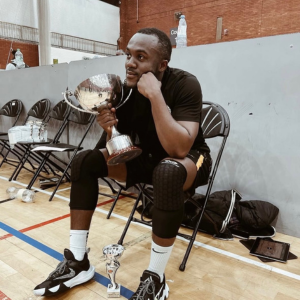
 In 2016, I was involved in a devastating pedestrian motor vehicle accident that left me in a coma for five days and resulted in a severe traumatic brain injury (TBI). At the time, doctors were uncertain about my recovery and questioned whether I would ever return to the life I once knew. Through an extensive rehabilitation journey, resilience, and support, I defied those expectations.
Following my recovery, I completed my undergraduate degree in psychology and earned Conference All-Star honours in my final university basketball season (2020). I later pursued my Master’s degree at the University of Westminster while playing semi-professional basketball for the Brent Bulls in the UK, winning the BUCS Championship in 2023. In 2024, I competed against professional teams in Greece, including a 26-point performance. I officially retired from professional basketball in July 2025.
My experience with brain injury profoundly shaped my life’s mission: to support and inspire other survivors and individuals facing adversity. I am currently completing my training to become a psychotherapist, driven by a deep understanding of the psychological and emotional impact of trauma and recovery. Having lived through identity loss, uncertainty, and the process of rebuilding, I am passionate about helping others rediscover purpose and resilience. I have been honoured to share my journey through national media outlets, including CBC and 100 Huntley Street.
What are some things that have helped you throughout the recovery journey?
What helped me most on my journey was resilience, the decision to keep going even when life knocked me down hard. The unwavering support of my family and mentors and my rehab team grounded me when I felt lost, and basketball gave me purpose, discipline, and a reason to believe in my body again. Education reminded me that my mind was still sharp, even after everything I’d been through, and therapy taught me how to sit with pain instead of running from it. Most of all, learning to be patient with myself changed everything, understanding that healing isn’t linear, and that progress, no matter how small, still counts.
If you could go back to when you first acquired your brain injury and tell yourself one thing, what would that be?
Be patient, It’s all going to work out.
What would you like people who don’t have a brain injury to know?
It’s an invisible injury, and I still struggle with things today, but leaning on your loved ones, and having a positive mindset can go a long way.
If you would like to check out Michael’s other interviews about his personal story, here are the links:
- CBC New Brunswick: From brain injury to basketball: Michael Otoo returns to the sport he loves
- CBC Nova Scotia: Video: Meet three East Coast athletes you’ll be seeing more of: Michael Otoo | Creator Network